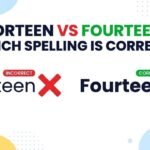
Incomplete is the correct and standard word. Uncomplete is rare, and standard dictionaries list incomplete as the usual form. If something is missing a part or is not finished, you should write incomplete in almost every situation.
The confusion is understandable. English uses both in- and un- to make negative adjectives, so uncomplete looks like a reasonable pattern. This guide explains the meaning of each word, the difference between incomplete and uncompleted, and the rare cases where uncomplete appears. You will also find examples, synonyms, an Urdu translation, common mistakes, and a short quiz. Use it as a quick reference whenever you are unsure.
Definition of “Incomplete” and “Uncomplete”
Incomplete is an adjective. Merriam-Webster defines it as not complete, meaning lacking a usually necessary part, element, or step. A missing page, a missing piece in a puzzle, or a half-finished form can all be incomplete.
Incomplete also works as a noun in American education. It names a temporary grade given when a student has not met one or more essential course requirements.
Uncomplete is a much less common adjective. Some online dictionaries define it as “not complete or total” and list incomplete as its synonym. Dictionary.com, however, returns results for incomplete when you search for uncomplete, which shows which form mainstream references treat as standard.
InComplete or UnComplete: Key Differences
The two words share a meaning, but they do not share the same status. One is standard in everyday English. The other is a rare variant that most writers and editors avoid.
The table below also includes uncompleted, a related word that is fully acceptable.
| Word | Status | Core Meaning | Example |
| Incomplete | Standard | Missing a part or not whole | The application was incomplete. |
| Uncompleted | Standard, narrower | Not yet finished | She left the puzzle uncompleted. |
| Uncomplete | Rare, not preferred | Same as incomplete | Avoid in formal writing. |
In short, choose incomplete when something lacks parts. Choose uncompleted when work was started but not finished. Avoid uncomplete.
Why “Incomplete” Is the Correct Word
Incomplete is the established adjective in the English language. Merriam-Webster records its first known use in the 14th century, so it has centuries of continuous use behind it.
It also covers a wide range of situations:
- Missing parts: an incomplete set of tools
- Unfinished tasks: an incomplete assignment
- Lacking information: an incomplete record
- Sports: an incomplete forward pass in football, meaning one not caught by a receiver
- Logic and science: incomplete protein, incomplete dominance, incomplete formal systems
Readers recognize the word instantly. That makes it the safest choice for essays, emails, reports, and exams.
Why “Uncomplete” Is Incorrect or Rare
Calling uncomplete flatly wrong would be too strong, because some dictionaries do record it. A more accurate description is that it is rare, unnecessary, and unlikely to be accepted in formal writing.
There are three practical reasons to avoid it:
- A standard word, incomplete, already does the job.
- Many readers will see uncomplete as a spelling or grammar mistake.
- Editors and teachers usually correct it without discussion.
Using it will not cause a misunderstanding, since people will probably guess your meaning. It will, however, make your writing look less polished.
Can “Uncomplete” Ever Be Used?
Rarely. You may see uncomplete in dictionary listings, word-list sites, or older and non-native writing. A writer might also coin it for deliberate effect, such as a wordplay in a poem or slogan.
Outside those cases, replace it. For a general meaning, use incomplete. If you mean that work stopped before the end, use uncompleted or unfinished.
Uncompleted Meaning
Uncompleted is a real, accepted adjective. The Oxford Advanced Learner’s Dictionary defines it as “that has not been finished,” with examples such as an uncompleted project. Vocabulary.com adds the football sense, an uncompleted pass, which is one not caught.
It builds on the past participle completed. That is why it often suggests an action that began but was not carried to its end. Compare these:
- The contract was incomplete. (A clause or signature is missing.)
- The contract remained uncompleted. (The process of finishing it never happened.)
In many sentences the two are interchangeable. The nuance matters most when you want to stress the unfinished action.
Incomplete or Uncompleted Building
Both words can describe a building, and both are correct. The difference lies in what you want to emphasize.
- Incomplete building: The structure lacks parts, such as a roof or a staircase.
- Uncompleted building: Construction began but was never finished.
In natural speech, unfinished building and half-built building are even more common. If construction is happening right now, under construction is the clearest phrase.
Linguistic Insight: Prefix “In-” vs “Un-“
Both prefixes can mean “not,” but they come from different sources and attach to different kinds of words.
- In- comes from Latin. It usually joins words that also came from Latin, such as inactive, incapable, and incomplete. Before certain letters it changes form, as in impossible and irregular.
- Un- is a native English prefix. It attaches freely to adjectives and participles, such as unhappy, unopened, and unfinished.
Complete comes from the Latin root complere, “to fill up.” Because it is a Latin-based adjective, English settled on in- for the standard form, giving incomplete. That standardization is a matter of usage history, not a strict rule, which is why a form like uncompleted still works with a participle.
Incomplete or Uncomplete Synonyms
Synonyms help you avoid repeating the same word. They differ slightly in tone, so choose carefully.
- Unfinished: best for tasks and projects
- Partial: best when only some of the whole exists
- Fragmentary: best for broken or scattered pieces of information
- Lacking or deficient: best for missing qualities or elements
- Half-done: informal, for work stopped midway
- Sketchy: informal, for vague or thin details
Dictionary.com lists fragmentary, partial, and unfinished among the main synonyms of incomplete. Antonyms include complete, whole, full, and finished.
Incomplete or Uncomplete in Urdu
The standard Urdu equivalents are:
- Incomplete: نامکمل (namukammal)
- Uncompleted: نامکمل or ادھورا (adhura), meaning unfinished or half-done
- Uncomplete: the same as incomplete, since it has no separate Urdu form
For example, “The report is incomplete” becomes رپورٹ نامکمل ہے. “The house remains unfinished” becomes گھر ادھورا ہے. The word ادھورا often carries a feeling of something left half-done, close to uncompleted.
Examples of “Incomplete” in Sentences
These original sentences show incomplete in everyday situations:
- Your registration is incomplete because the phone number field is empty.
- The detective warned that the evidence was still incomplete.
- A diet with no variety can be nutritionally incomplete.
- The student received an incomplete in chemistry and finished the lab in January.
- He gave an incomplete answer and left out the main reason.
- The museum displayed an incomplete skeleton.
Uncompleted works best with a specific action or task:
- The uncompleted tasks stayed on the whiteboard all week.
- The quarterback threw an uncompleted pass.
Common Mistakes and Confusions
- Incorrect: She sent an uncomplete application.
Correct: She sent an incomplete application.
Use the standard adjective. - Incorrect: The form is in complete.
Correct: The form is incomplete.
Incomplete is one word. Writing in complete changes the meaning to “inside the complete.” - Incorrect: Our knowledge of the topic is uncompleted.
Correct: Our knowledge of the topic is incomplete.
Knowledge lacks parts. It is not an action that stopped. - Incorrect: I got an uncomplete in math.
Correct: I got an incomplete in math.
Only incomplete names the grade. - Incorrect: The house is in-complete.
Correct: The house is incomplete.
Do not add a hyphen.
Expert Opinion on Correct Usage
Reference works point in the same direction. Merriam-Webster treats incomplete as the main entry and gives it several senses. Dictionary.com also treats it as the standard word and redirects searches for uncomplete. Oxford Learner’s Dictionaries recognizes uncompleted for things not yet finished.
Some aggregator dictionaries do list uncomplete, but they mostly describe it as a synonym of incomplete. The editorial conclusion is straightforward: use incomplete by default, use uncompleted when you stress an unfinished action, and avoid uncomplete in professional, academic, and published writing.
Self-Assessment: Test Your Understanding
Try these six questions before checking the answers.
- Complete the sentence: “The survey was ______ because three pages were missing.”
- Which is the standard adjective, uncomplete or incomplete?
- Correct this sentence: “He submitted an uncomplete form.”
- Which word best stresses that work began but never finished: incomplete or uncompleted?
- True or false: In US education, incomplete can be a noun for a temporary grade.
- Which prefix does the word incomplete use?
Answers to Self-Assessment
- Incomplete.
- Incomplete.
- “He submitted an incomplete form.”
- Uncompleted.
- True.
- The prefix in-.
Frequently Asked Questions
Is uncomplete a real word?
Some dictionaries record it, but it is rare and not preferred. Use incomplete instead.
Which word should I use for a task that is not finished?
Use unfinished, uncompleted, or incomplete. Incomplete is the safest choice if you are unsure.
Can incomplete be a noun?
Yes. In American education, an incomplete is a temporary grade given when a student has outstanding coursework.
What is the opposite of incomplete?
The usual opposite is complete. Whole, full, and finished work, depending on the context.
How do you pronounce incomplete?
It is pronounced in-kuhm-PLEET. Dictionary.com gives the American pronunciation as /ˌɪn kəmˈplit/.
Is an incomplete sentence the same as a sentence fragment?
Usually, yes. People use “incomplete sentences” for a group of words that lacks a subject, a verb, or a finished thought.
Do American and British English treat these words differently?
The core meaning is the same in both. The football sense, an incomplete pass, and the school-grade noun are mainly American uses.
Conclusion
Incomplete is the correct, standard word for anything missing a part or not yet whole. Uncompleted is also acceptable when you want to stress that work began but did not finish. Uncomplete is rare and best avoided. When in doubt, write incomplete.