Typing quickly on a phone or keyboard often leads to small slips, and one of the most common mix-ups happens between two words that look nearly identical but mean very different things. This confusion shows up constantly in emails, work chats, and school messages, especially when someone is rushing to confirm a schedule.
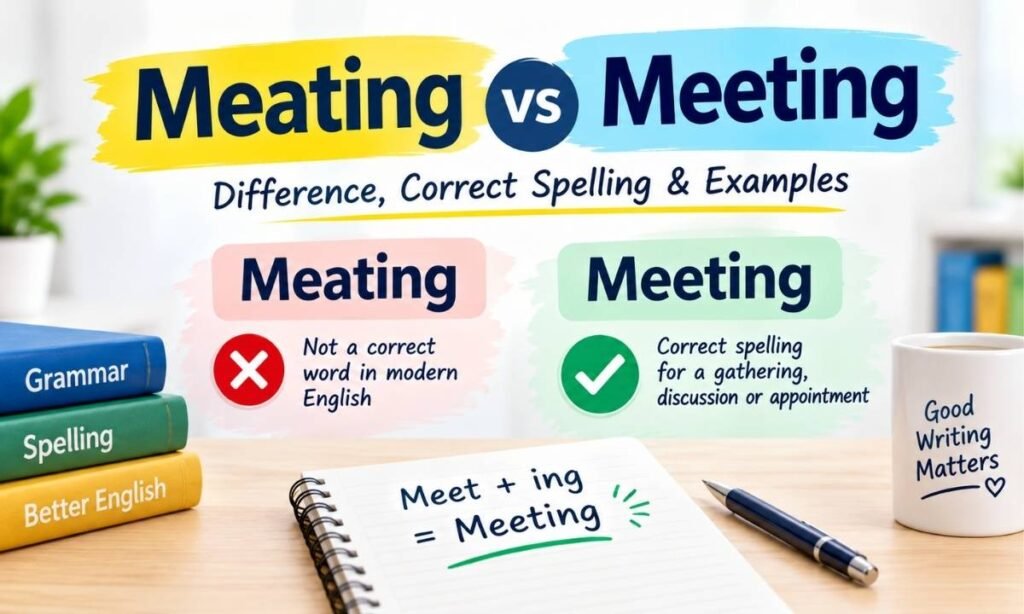
The correct word for a gathering, appointment, or discussion is meeting. Meating is not a standard word in modern English and should not be used to describe a scheduled event. This guide breaks down the exact difference, shows real examples, and explains why this particular typo happens so often.
Meating vs Meeting: Quick Answer
Is Meeting the Correct Spelling?
Yes, meeting is the correct spelling for a gathering, appointment, discussion, or the act of coming together with someone.
Is Meating a Correct English Word?
No, meating is not a standard word in modern English and does not appear in mainstream dictionaries as a valid term for a gathering.
Meating vs Meeting in One Simple Example
Writing I have a meating at noon is incorrect, while I have a meeting at noon is the proper, standard way to write the sentence.
What Does Meeting Mean?

Meeting as a Noun
As a noun, meeting refers to a planned occasion where people come together to discuss something, make decisions, or share updates.
Meeting as the -ing Form of Meet
Meeting also functions as the present participle of the verb meet, describing the ongoing action of coming together with someone.
Meeting Meaning in Everyday English
In daily conversation, meeting can describe anything from a quick coffee catch up to a formal scheduled appointment.
Meeting Meaning in Business and Work
In professional settings, meeting typically refers to a structured discussion involving colleagues, clients, or teams, often with an agenda.
What Does Meating Mean?
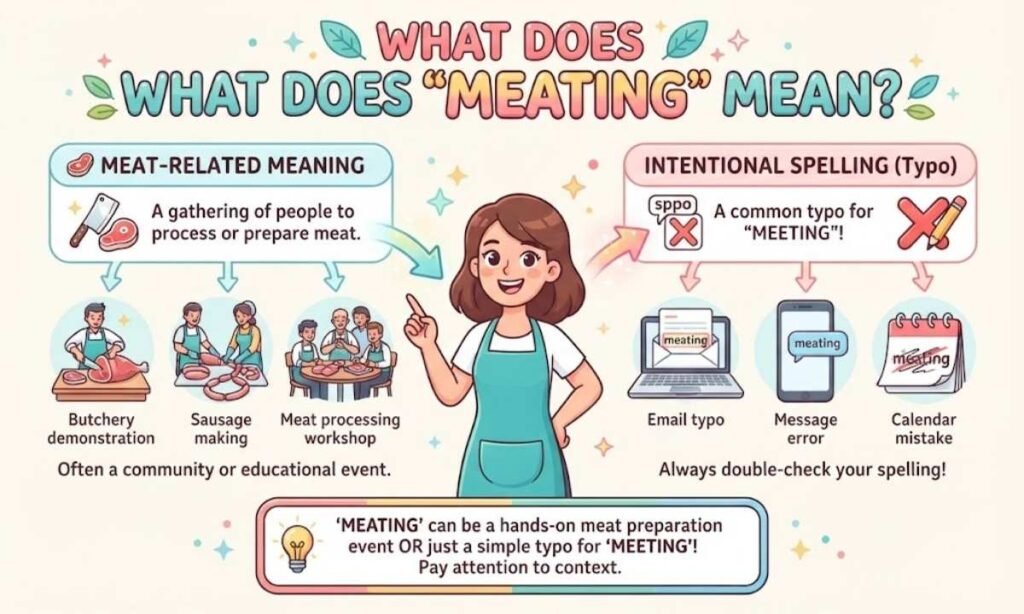
Is Meating a Misspelling of Meeting?
In almost every modern context, yes, meating is simply a spelling error where the second e has been replaced or dropped incorrectly.
Why Do People Write Meating?
The mistake usually happens because meeting and meating sound almost identical when spoken quickly, leading to confused typing.
Can Meating Ever Be Used Intentionally?
Outside of dialectal or historical writing, meating is not intentionally used and should be avoided in any standard communication.
Meating in Rare or Historical Usage
Some older or regional texts have used meating in unrelated senses tied to food or provisioning, but this usage is obsolete and irrelevant to modern scheduling language.
Meating vs Meeting: Key Differences
| Feature | Meating | Meeting |
| Standard modern English | No | Yes |
| Correct for a gathering | No | Yes |
| Related to the verb meet | No | Yes |
| Appropriate for business use | No | Yes |
| Appropriate for school use | No | Yes |
| Common in everyday writing | No | Yes |
Why Meating and Meeting Are Easy to Confuse
They Sound Nearly the Same
Both words share a similar rhythm and vowel sound, making them easy to mix up during fast speech or typing.
The Words Differ by Only One Letter
A single missing or misplaced letter is often the entire difference, which makes the error easy to overlook while proofreading quickly.
Fast Typing Can Cause the Mistake
Rushed typing on a phone keyboard frequently drops or swaps letters, and meeting is a common casualty of this habit.
Autocorrect and Voice Typing Can Add Confusion
Voice to text tools sometimes misinterpret spoken words, occasionally producing meating instead of the intended meeting.
Meeting vs Meating Examples
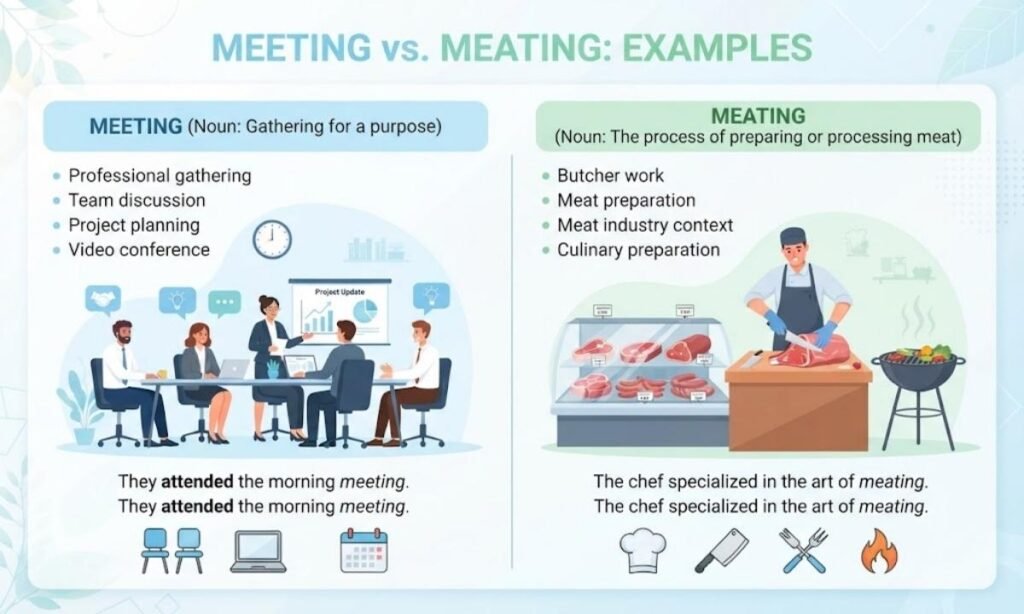
Correct Examples With Meeting
● The meeting starts at 9 AM.
● We scheduled a team meeting for Friday.
● She joined the meeting online.
Common Incorrect Examples With Meating
● The meating starts at 9 AM.
● We scheduled a team meating for Friday.
● She joined the meating online.
Business Meeting Examples
The quarterly business meeting will cover budget updates and new client proposals.
School Meeting Examples
Parents are invited to the school meeting next Tuesday evening.
Online Meeting Examples
The online meeting link was shared in the group chat this morning.
Casual Conversation Examples
I’m meeting my friend for coffee after work today.
Meating or Meeting in a Sentence?
I Have a Meeting Tomorrow
This is the correct way to reference an upcoming scheduled appointment.
I Have a Meeting With My Boss
This sentence correctly describes a planned discussion with a supervisor.
We Are Having a Team Meeting
This properly refers to a group discussion among coworkers or teammates.
The Meeting Starts at 10 AM
This correctly states the scheduled start time of a gathering.
I’m Meeting My Friend Today
This uses meeting correctly as the ongoing form of the verb meet.
Meeting, Meating, and Meting: What’s the Difference?
Meeting Meaning
Meeting refers to a gathering, appointment, or the act of coming together with someone.
Meating Meaning
Meating is not a standard modern word and is almost always a misspelling of meeting.
Meting Meaning
Meting comes from the verb mete, meaning to distribute or administer something, as in meting out punishment.
Meeting vs Meting
These two words look similar but have completely unrelated meanings, one describing a gathering and the other describing distribution.
Meating vs Meting
Meating and meting are both easily confused with meeting, yet neither one shares its meaning.
Easy Way to Tell All Three Apart
Remember that meeting comes from meet, meting comes from mete, and meating is simply an error with no standard use.
How to Remember the Correct Spelling of Meeting
Remember Meet Plus ING
Meeting is built directly from the base word meet, so keeping both e’s intact preserves the correct spelling.
The Two E Spelling Trick
Picture the double e in meet carrying straight through into meeting without ever dropping a letter.
A Simple Memory Trick for Students
Students can remember that meeting always keeps the same two e’s found in the word meet, no matter what suffix follows.
Check the Word Before Sending a Message
A quick reread before hitting send can catch a stray meating before it reaches a teacher, boss, or client.
Common Meating Spelling Mistakes
| Incorrect Phrase | Correct Phrase |
| Team meating | Team meeting |
| Business meating | Business meeting |
| Online meating | Online meeting |
| School meating | School meeting |
| Client meating | Client meeting |
| Staff meating | Staff meeting |
Is Meating Ever Correct in Modern English?
Standard English vs Rare Usage
In standard modern English, meating has no accepted role, while any historical or dialectal use is considered obsolete.
Why Context Matters?
Context almost always confirms that a writer intended meeting, since meating rarely fits any coherent modern sentence.
When You Should Use Meeting Instead?
Anytime you are referring to a gathering, appointment, or the verb meet in its ongoing form, meeting is the correct choice.
What to Write in Formal English?
Formal writing should always use meeting, since meating carries no recognized meaning in professional or academic contexts.
Meating vs Meeting in American English
Which Spelling Should Americans Use?
American English follows the same standard as global English, using meeting exclusively for scheduled gatherings and appointments.
Meeting in US Business Writing
US workplace communication relies heavily on the word meeting across emails, calendars, and internal messaging tools.
Meeting in US School Writing
American school systems use meeting consistently for parent conferences, staff gatherings, and student group sessions.
Meeting in Emails and Messages
Professional emails and casual messages both rely on meeting as the standard, expected spelling.
The Origin of the Word Meeting
Meeting traces back to the Old English verb metan, meaning to come together or encounter. Over time, the noun form developed to describe the organized gathering itself, while the verb form continued describing the act of encountering someone, a dual role the word still carries today.
How Autocorrect Tools Handle This Error?
Most modern spellcheckers and keyboard autocorrect systems automatically flag or fix meating, converting it back to meeting. However, voice typing software occasionally misses this correction, especially in noisy environments, which is why manual proofreading still matters even with built in spelling tools.
Meating vs Meeting in Professional Email Etiquette
Using meating in a client email or formal report can appear careless and may affect how a message is perceived, even if the rest of the writing is polished. Since first impressions matter in professional communication, confirming this one spelling before sending protects overall credibility.
Regional and Dialectal Notes on Meating
A small number of older regional texts have used meating in agricultural or food related contexts, unrelated to scheduling. This usage has effectively disappeared from contemporary writing and should not influence how the word is used in everyday or business communication today.
Frequently Asked Questions
Is Meating or Meeting Correct?
Meeting is correct. Meating is not a standard word for describing a gathering or appointment.
Is Meating a Real Word?
Meating has some obsolete historical use but is not a valid modern word for a meeting.
Why Do People Spell Meeting as Meating?
The two words sound alike when spoken quickly, which often leads to this common typing mistake.
What Is the Difference Between Meating and Meeting?
Meeting describes a gathering or appointment, while meating has no standard meaning in modern English.
Is Meating a Typo?
Yes, in nearly every modern context, meating is simply a typo for meeting.
How Do You Spell Meeting Correctly?
Meeting is spelled with two e’s, following the base word meet plus the ing ending.
What Is the Difference Between Meeting and Meting?
Meeting refers to a gathering, while meting comes from the verb mete, meaning to distribute or administer.
Conclusion
Use meeting when you mean a gathering, discussion, appointment, encounter, or the act of meeting someone.
Meating should not normally be used for these meanings in modern standard English, and confirming this small spelling detail helps keep everyday and professional writing clear and credible.