Typing a quick sentence about an expensive dinner or a costly gadget, many writers pause at the same small question: is it pricey or pricy? Both versions look plausible on screen, and spellcheck rarely flags either one, which only adds to the confusion.
The good news is that this is not a case of one spelling being wrong. Both forms exist in English, though they are not used equally. This guide breaks down the meaning, the difference, and exactly when each spelling makes sense.
Pricey or Pricy: The Quick Answer
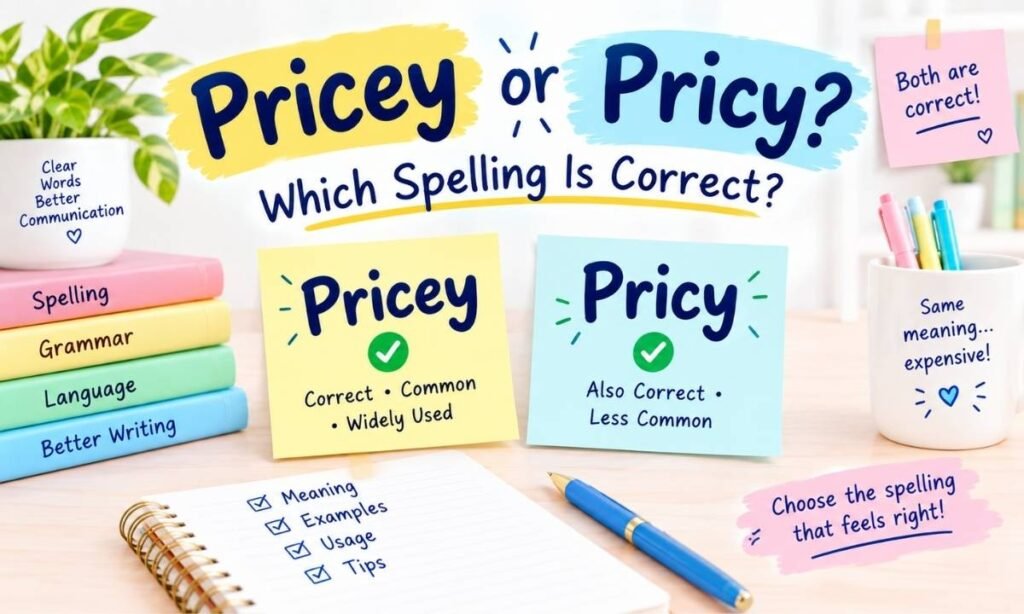
Both pricey and pricy are accepted spellings of the same adjective, meaning expensive or costing more than expected. Pricey is the standard, widely used form found in dictionaries, newspapers, and everyday writing, while pricy is a recognized but far less common variant. When in doubt, pricey is the safer, more familiar choice for most readers.
What Does Pricey Mean?
Pricey describes something that costs a lot of money, often with a slightly subjective or conversational tone rather than a strictly technical one. It usually implies that a price feels high relative to expectations, not simply that a number is large.
- The concert tickets were pretty pricey this year
- That neighborhood has some pricey apartments
- Fixing the car turned out to be more pricey than expected
What Does Pricy Mean?
Pricy carries the exact same meaning as pricey. It describes something expensive, with no shift in definition between the two spellings. The only real difference is how familiar the spelling looks to most readers, since pricy appears far less often in published writing.
Pricey vs Pricy: What Is the Real Difference?
The difference between these two words has nothing to do with meaning and everything to do with usage frequency and reader familiarity.
- Meaning: identical in both spellings
- Usage: pricey appears far more often in books, articles, and online content
- Formality: both lean informal, though pricey is accepted more broadly
- Reader perception: pricy can look like a typo to many readers, even though it is not
Is Pricey or Pricy Correct in American English?
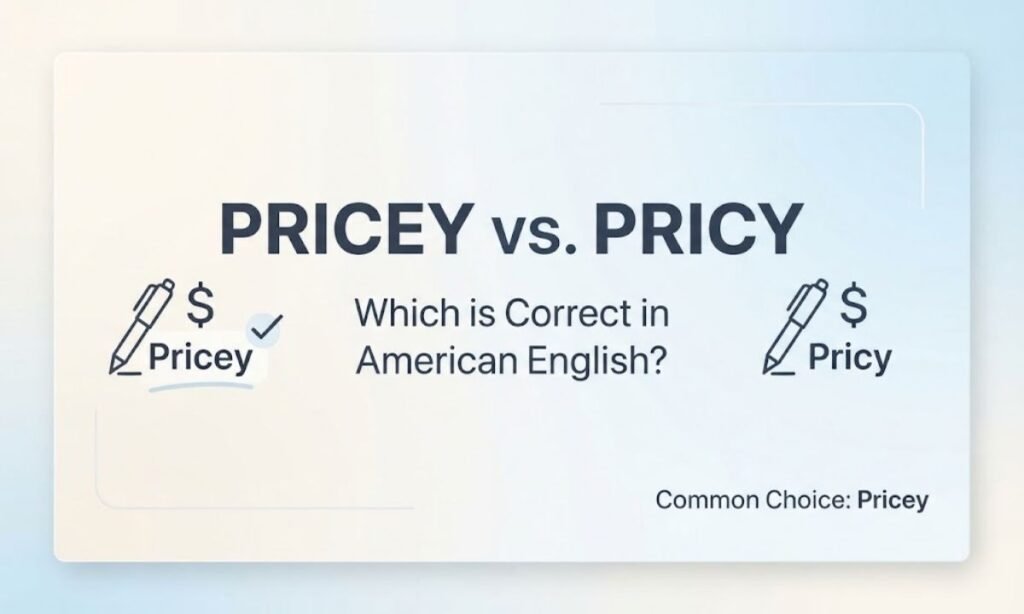
American English recognizes both spellings, but pricey dominates in everyday use, from news articles to product reviews. Major American dictionaries list pricey as the primary entry, which is why most style guides and editors default to it. Pricy still shows up occasionally, though it remains the less expected choice for American readers.
Pricey or Pricy in British English
British English follows a similar pattern to American usage. Pricey is the far more common spelling across UK publications, while pricy is understood but rarely chosen in professional writing. There is no meaningful regional split here, unlike true American versus British spelling differences such as color and colour.
Where the Word Pricey Actually Comes From
The word developed from the noun price, combined with the adjective forming suffix y, the same pattern seen in words like spicy and dicey. Language historians trace the word back to the early twentieth century, when it entered casual spoken English before becoming common in print. Over time, pricey settled into the dominant spelling, largely because keeping the e from price feels more visually natural to readers.
Pricey and Pricy in Marketing and Business Writing
Brand copywriters tend to favor pricey specifically because it reads as approachable rather than clinical. In product descriptions, reviews, and social captions, pricey signals a relatable, conversational tone that resonates with casual shoppers, while formal terms like premium priced feel more corporate. Pricy is rarely chosen here, since even one unfamiliar looking word can quietly reduce trust in polished business content.
Regional Preferences Across English Speaking Countries
Outside the US and UK, English speaking regions such as Australia, Canada, and India also favor pricey almost universally in everyday writing. This consistency makes pricey a genuinely global default rather than a regionally specific preference. Writers targeting an international audience rarely need to worry about switching spellings based on location.
Pricey vs Pricy Examples Side by Side
| Sentence With Pricey | Sentence With Pricy |
| The hotel room was surprisingly pricey. | The hotel room was surprisingly pricy. |
| These headphones are a bit pricey for students. | These headphones are a bit pricy for students. |
| Eating out every weekend gets pricey fast. | Eating out every weekend gets pricy fast. |
Both columns are grammatically correct, and the meaning stays exactly the same in every pair.
Pricey and Pricy Comparative and Superlative Forms
Both spellings follow the standard comparative pattern used for short adjectives ending in y.
- Comparative form: pricier
- Superlative form: priciest
- Example: This café is pricier than the one downtown, and honestly the priciest option nearby.
Pricey vs Pricy Quick Comparison Table
| Feature | Pricey | Pricy |
| Meaning | Expensive | Expensive |
| Dictionary status | Standard entry | Recognized variant |
| Common usage | Very common | Rare |
| Formal writing | Acceptable informally | Generally avoided |
| Comparative form | Pricier | Pricier |
| Superlative form | Priciest | Priciest |
| Recommended default | Yes | Only if intentional |
Better Alternatives for Formal Writing
Since both pricey and pricy read as informal, formal writing usually calls for a different word entirely.
- Expensive
- Costly
- High priced
- Overpriced
- Financially demanding
Academic papers, legal documents, and formal reports generally read better with expensive or costly rather than either casual variant.
Synonyms and Alternatives to Pricey
Beyond strictly formal contexts, several everyday synonyms can add variety to writing without repeating pricey too often.
- Costly, for a slightly more serious tone
- Steep, for casual spoken style
- Overpriced, when the cost feels unjustified
- Expensive, as the neutral, all purpose default
Simple Ways to Remember the Correct Spelling
A quick memory trick makes the choice easier the next time doubt creeps in. Since pricey comes directly from price, keeping that same e before adding y mirrors the original word exactly, while pricy drops it. Thinking of similar words like spicy and dicey, which also keep their base spelling pattern, reinforces why pricey tends to feel more natural on the page.
Frequently Asked Questions
Is pricey or pricy correct?
Both are correct, but pricey is the standard, far more common spelling used in most writing.
Is pricy a real word?
Yes, pricy is a recognized variant spelling, even though it appears much less often than pricey.
Are pricey and pricy the same meaning?
Yes, both describe something expensive, with no difference in meaning between them.
Which spelling is more common, pricey or pricy?
Pricey is significantly more common across books, articles, and everyday writing worldwide.
Is pricy acceptable in American English?
Yes, it is understood, though pricey remains the clearly preferred spelling in American writing.
Is pricey considered formal or informal?
Pricey is informal, so formal writing typically uses expensive or costly instead.
What is the comparative form of pricey?
The comparative form is pricier, and the superlative form is priciest.
Conclusion
Both pricey and pricy are technically correct spellings that mean exactly the same thing, expensive or costing more than expected. Pricey remains the far safer, more familiar choice for everyday writing, marketing copy, and casual content, while pricy stays a rarely used variant.
For formal writing, reaching for expensive or costly is still the strongest option.