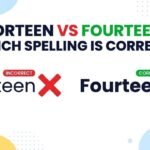
The correct spelling is proving. “Prooving” is a misspelling and does not appear in standard dictionaries. Proving is the present participle of the verb prove, and it follows a regular rule: the silent e at the end of prove is dropped before -ing is added.
Many writers add a second o because the related noun proof contains one. That habit is understandable, but it mixes up two different words. This guide explains the rule, compares proving with prooving and proofing, and shows how to use the word correctly in school, work, and online writing, so you can spell it with confidence.
Proving vs Prooving: The Quick Answer
Use proving. It has one o, then a v, and no e before the -ing ending.
- Correct: She is proving that the method works.
- Incorrect: She is prooving that the method works.
The verb is prove, so the -ing form is proving, just as move becomes moving.
What Does “Proving” Mean?
Definition of Proving
Proving means showing that something is true, real, or valid by using evidence, logic, or results. It can also mean testing something to find out whether it works.
Proving as the Present Participle of Prove
Proving is the present participle of prove. It forms continuous tenses (is proving, were proving), works as a gerund (Proving a theorem takes time), and can describe a noun (a proving process).
Common Meanings of Proving
- Demonstrating that a claim is true: He is proving his theory with data.
- Establishing a fact: The lawyer is proving negligence.
- Showing results over time: The new schedule is proving effective.
- Supporting an argument: She is proving her case with three studies.
- Validating a claim: Independent testing is proving the product’s durability.
- Letting bread dough rise before baking, mainly in British English: The dough is proving on the counter.
Proving in Modern English Usage
In current English, proving is common in speech, journalism, academic writing, and business reports. It also appears in fixed phrases such as proving ground and proving grounds.
Is “Prooving” a Real Word?
Why “Prooving” Looks Correct
Prooving looks plausible because proof has a double o and the two words are closely related in meaning. A writer who pictures proof plus -ing may land on prooving.
Why English Grammar Rejects “Prooving”
The -ing form is built from the verb prove, so the base spelling prov- stays the same. The double o belongs to the noun proof, not to the verb.
Dictionary Status of Prooving
Standard dictionaries list prove, proving, proved, and proven. They do not list prooving as a word or as a variant spelling. It is treated as an error.
Is Prooving Ever Acceptable?
Not in standard writing. The only exceptions are deliberate ones, such as quoting a misspelling in a lesson on common errors, imitating poor spelling in dialogue, or a brand name that breaks the rule on purpose.
The Grammar Rule Behind Proving
How Verbs Change When Adding -ing
When a verb ends in a silent e, the e is usually dropped before a suffix that begins with a vowel. This is the rule that turns prove into proving.
Why the Silent “E” Disappears
The final e in prove shows how the vowel is pronounced. Once -ing is added, the vowel sound stays the same, so the marker is no longer needed.
Why the Double “O” Is Incorrect
The base verb already has one o. Adding another has no grammatical purpose and produces a spelling that matches no English word.
Similar Word Patterns
- move → moving
- remove → removing
- improve → improving
- approve → approving
- disprove → disproving
A few verbs keep the e, such as be → being and see → seeing, but prove is not one of them.
Prove, Proving, Proved, and Proven
Understanding the Complete Word Family
| Form | Type | Example |
| prove | Base verb | They hope to prove it. |
| proves | Third-person singular | The result proves the point. |
| proving | Present participle, gerund | Proving it took weeks. |
| proved | Past tense, past participle | She proved him wrong. |
| proven | Past participle, adjective | It is a proven method. |
| proof | Noun | The photo is proof of the event. |
| provable / unproven / disprove | Related words | The claim is provable. The theory is still unproven. |
Difference Between Proved and Proven
Dictionaries accept both as past participles. Proved is the regular form and is also the usual past tense. Proven is common as an adjective before a noun (a proven strategy) and is widely used as a participle, especially in American English. Style guides differ, so consistency within a document matters more than the choice itself.
When to Use Each Form Correctly
- Use proving after is, are, or was, or as a gerund.
- Use proved for finished actions: The test proved her right.
- Use proven before a noun: a proven record.
- Use prove or proves for present-tense statements.
Proving vs Prooving: Side-by-Side Comparison
| Form | Status | Example | Note |
| Proving | Correct | He is proving his skills. | -ing form of prove |
| Prooving | Incorrect | He is prooving his skills. | Not in dictionaries |
| Proofing | Correct, different word | She is proofing the document. | Comes from proof, not prove |
How to Use Proving Correctly in Sentences
Everyday Conversation Examples
- “I’m proving to myself that I can finish a marathon.”
- “Thanks for proving me wrong about the restaurant.”
Academic Writing Examples
- “The study is proving that sleep affects memory in measurable ways.”
- “Proving causation requires more than showing a correlation.”
Business Writing Examples
- “The pilot program is proving cost-effective for small teams.”
- “We are proving the business case before requesting budget.”
Professional Communication Examples
- “I am proving my commitment by completing the certification this quarter.”
- “The claimant is responsible for proving that the contract was breached.”
Proving in Different Contexts
Proving in Education
Teachers ask students to support ideas with evidence: Students are proving their understanding through short essays.
Proving in Science and Research
Science usually supports or rejects hypotheses rather than proving them absolutely. A careful wording is The data is proving consistent with the model.
Proving in Mathematics
In mathematics, proving means building a logical argument that a statement is always true: Proving the theorem required induction.
Proving in Law
In law, proving refers to meeting a burden of proof: The prosecution is proving intent through witness testimony.
Proving in Business and Marketing
Teams talk about proving a concept, proving value, or proving return on investment: The campaign is proving its worth.
Synonyms for Proving
Depending on the sense, useful synonyms include demonstrating, showing, confirming, verifying, establishing, validating, and testing. Choose the one that fits: verifying suits checking facts, while demonstrating suits showing results to an audience. Prooving has no synonyms because it is not a word.
Proving a Point and Proving My Point Meaning
Proving a point means showing that an opinion or claim is correct, often through an action or example. Proving my point means the speaker believes the evidence supports their earlier claim.
- “Her perfect score is proving my point about practice.”
- “He ran the race barefoot just to prove a point.”
The phrase is sometimes used when someone acts mainly to demonstrate a belief rather than for a practical reason.
Proving Pronunciation
Proving is pronounced /ˈpruːvɪŋ/, like “PROO-ving.” The stress falls on the first syllable and the “oo” is long. British and American speakers pronounce it almost identically.
Why People Misspell Proving as Prooving
Pronunciation-Based Errors
The long “oo” sound is often spelled oo in words such as moon and food. Writers who spell by ear add the extra o.
Typing Habits and Muscle Memory
Typing proof often can leave the fingers repeating the double o when the next word is proving.
Influence of Similar-Looking Words
Proof, proofread, and proofing appear frequently, which makes the double o feel familiar.
Autocorrect and Spellcheck Issues
Most spellcheckers flag prooving, but a writer who clicks “ignore” or turns checking off can leave it in. A wrong suggestion, such as proofing, can also slip through.
Lack of Grammar Awareness
Writers unsure of the silent-e rule may not realize that prove is the base word, so they guess at the spelling.
Common Spelling Mistakes Related to Proving
Prooving vs Proving
Prooving is wrong. Write proving.
Proveing vs Proving
Proveing keeps the silent e. Drop it: proving.
Proven vs Proving
Proven is a past participle or adjective (a proven result). Proving is the -ing form (is proving a result).
Proofing vs Proving
Proofing is a real word, but it belongs to proof. Do not use it to mean demonstrating truth. The next sections explain the difference.
Proved vs Proven vs Proving
Proved and proven are past forms, while proving is the -ing form. Match the form to the sentence, as shown in the word family table above.
Real Examples of Correct and Incorrect Usage
Sentence Correction Examples
- Incorrect: The results are prooving our theory.
- Correct: The results are proving our theory.
- Incorrect: He keeps proveing me wrong.
- Correct: He keeps proving me wrong.
Before-and-After Examples
- Before: We are prooving the concept this month.
- After: We are proving the concept this month.
Frequently Seen Online Mistakes
Errors that commonly appear in comments, captions, and product pages include “prooving a point,” “prooving them wrong,” and “prooving it works.” Each should read proving.
Professional Writing Examples
- Report: “The trial is proving the treatment’s safety over a longer period.”
- Email: “Thank you for proving that this process can work at scale.”
Proving vs Proofing: Understanding Another Common Confusion
What Proofing Means
Proofing comes from proof. It can mean checking text for errors (proofing a draft), making something resistant (as in waterproofing), or letting yeast dough rise, mainly in American English.
What Proving Means
Proving comes from prove. It means demonstrating truth, testing, or turning out to be a certain way. In British baking, it also describes letting dough rise.
Key Differences
- Proving demonstrates or tests. Proofing checks, protects, or lets dough rise.
- Proving comes from the verb prove. Proofing comes from the noun proof.
- Baking is the overlap: British English tends to use proving, and American English tends to use proofing.
- Incorrect: She is proofing her innocence. Correct: She is proving her innocence.
Does Correct Spelling Matter for SEO and Professional Writing?
Impact on Search Visibility
Search engines usually recognize common misspellings, but a misspelled word in a title or heading can make a page look careless. No specific ranking effect is guaranteed.
User Trust and Credibility
Readers often judge reliability from small details. A spelling error in a headline can reduce trust before the content is read.
Academic and Workplace Implications
Errors in essays, applications, and reports can cost marks or raise doubts about attention to detail.
Brand Reputation and Content Quality
Consistent spelling signals editorial care. Web pages, ads, and social posts reach many readers, so errors are widely seen and hard to retract.
Historical Development of the Word Prove
Origins of Prove
Prove entered English from Old French prover, which comes from Latin probare, meaning to test or approve. It is related to probe and probable.
Evolution Into Proving
The verb took the regular -ing ending, and the silent-e rule produced proving. The noun proof developed its own spelling and kept the double o.
Historical Grammar Patterns
Older English often used prove in the sense of “test.” That sense survives in proving ground and in the saying “the exception proves the rule.”
How Modern Usage Became Standard
Printing, dictionaries, and school instruction fixed spellings over the centuries. Today proving is the only standard form.
Easy Tricks to Remember the Correct Spelling
The Silent-E Removal Trick
Write prove, remove the e, and add -ing. The result is proving.
The Root Word Method
Start with the verb. If the verb has one o, the -ing form has one o.
Visual Memory Technique
Picture the letters in order: p-r-o-v-i-n-g. The v follows the single o, so there is no room for a second one.
Common Pattern Recognition
Compare it with moving, removing, and improving. If those look right, proving belongs with them.
Case Study: Student Essay Correction
Original Draft
“The author is prooving that climate policy affects local economies.”
Corrected Draft
“The author is proving that climate policy affects local economies.”
Result
The correction removes a spelling error that could lower the essay’s mark, and the claim reads as careful and confident.
Case Study: Job Application
Version A
“I am prooving my skills through ongoing certifications.”
Version B
“I am proving my skills through ongoing certifications.”
Version B is the one a hiring manager should see. A single spelling error in a short statement is easy to notice and can suggest a lack of care.
Practice Exercises
Fill in the Blank
- The scientist is ______ her theory. (prove)
- They are ______ that the plan works. (prove)
Choose the Correct Spelling
- He is ______ his loyalty. (proving / prooving / proveing)
Sentence Correction Exercise
- Correct this sentence: “The data is prooving the point.”
- Correct this sentence: “She keeps proveing everyone wrong.”
Context-Based Practice
- “The editor is ______ the manuscript for typos.” (proving / proofing)
- “The new software is ______ more reliable than expected.” (proving / proofing)
- Fix the errors: “The team is prooving that the new tool works. They are proveing it with real data.”
Answers and Explanations
Exercise Solutions
- proving
- proving
- proving
- The data is proving the point.
- She keeps proving everyone wrong.
- proofing
- proving
- “The team is proving that the new tool works. They are proving it with real data.”
Grammar Breakdown
Items 1 to 5 and 8 test the silent-e rule on prove. Item 6 uses proofing because the editor is checking text. Item 7 uses proving because the software is turning out to be reliable.
Key Takeaways
- The correct spelling is proving.
- Prooving and proveing are errors.
- Drop the silent e from prove before adding -ing.
- Proofing is a different word from proving.
- Proved and proven are both accepted past participles.
- Use proving when you mean demonstrating, testing, or establishing truth.
Frequently Asked Questions
Is it proving or prooving?
It is proving. Prooving is a misspelling and is not accepted in standard dictionaries.
Why does prove lose its e before -ing?
English usually drops a silent final e before a suffix that begins with a vowel. The same pattern turns move into moving and approve into approving.
Is proved or proven correct?
Both are correct past participles. Proven is especially common before a noun, as in proven method, while proved is the regular past tense.
What is the difference between proving and proofing?
Proving comes from prove and means demonstrating or testing. Proofing comes from proof and refers to checking text, making things resistant, or letting dough rise.
Can proving be used as a noun?
Yes, as a gerund. In Proving the theorem took hours, the phrase acts as a noun and is the subject of the sentence.
Does proving differ in British and American English?
The spelling is the same. The main difference is in baking, where British English often uses proving for dough rising and American English often uses proofing.
Will spellcheck always catch prooving?
Most spellcheckers flag it, but not all tools do, and some suggest the wrong replacement. Proofread any text that contains proof and prov- words.
Conclusion
The correct spelling is proving, the -ing form of prove. Drop the silent e, keep a single o, and do not confuse the verb with the noun proof or the word proofing. Spell the verb first, and the -ing form follows.