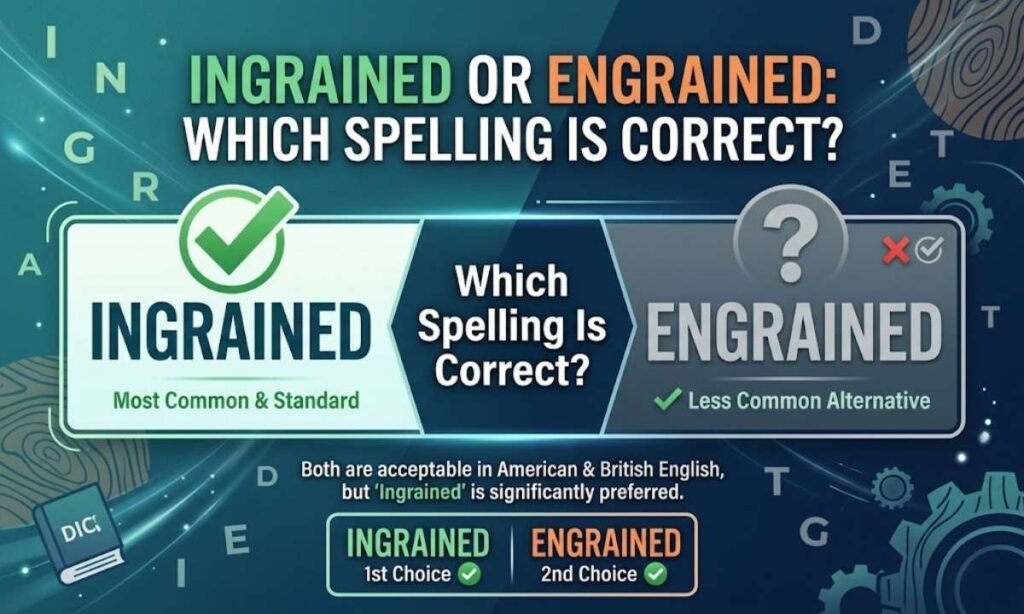
Ingrained is the correct and preferred spelling in modern American English. It describes something deeply fixed, firmly established, or hard to change, like a habit or belief.
Engrained also appears in dictionaries as a recognized variant, so it is not a random typo. This guide covers meaning, usage, examples, pronunciation, and a simple memory tip so you can choose the right spelling every time.
Ingrained or Engrained: Which One Is Correct?
Both forms exist, but they are not equal in everyday use. Writers, editors, and teachers overwhelmingly choose one of them.
Is “Ingrained” the Correct Spelling?
Yes. Ingrained is the standard spelling and the safest choice for school, work, and publishing.
Is “Engrained” a Real Word?
Yes. Major dictionaries list it as an alternative form of ingrained, so it is a real word, just a less common one.
What Is the Difference Between Ingrained and Engrained?
There is no difference in meaning or pronunciation. The only difference is popularity and how polished the spelling looks in formal writing.
What Does Ingrained Mean?
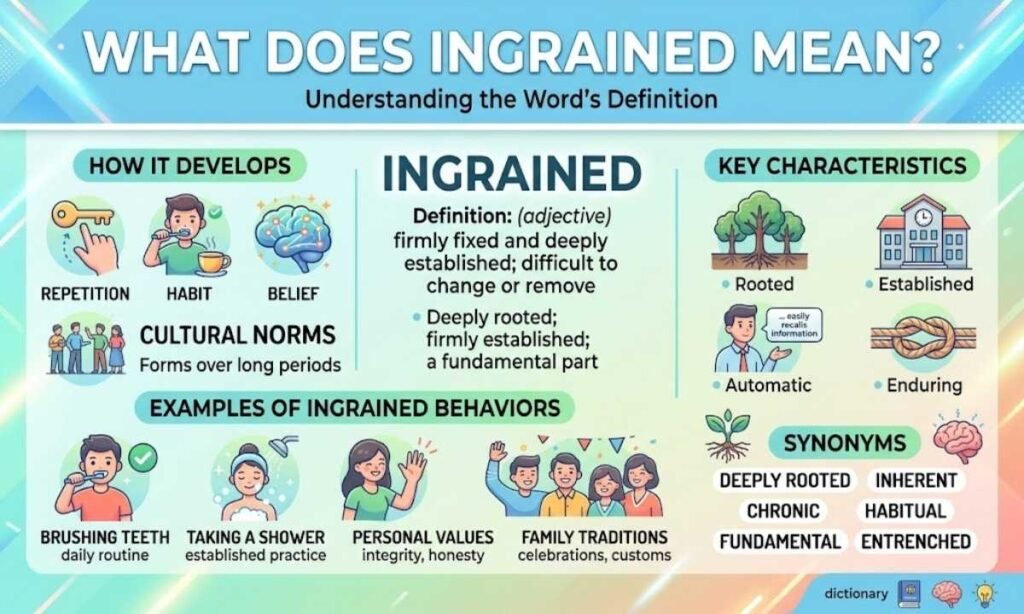
Ingrained describes something so firmly established that it feels almost impossible to remove. It usually points to beliefs, habits, and attitudes formed over a long time.
Ingrained Meaning in Simple English
Think of it as “fixed deep inside.” If something is ingrained, it has become part of who you are or how a group behaves.
What Does Deeply Ingrained Mean?
Deeply ingrained adds emphasis. It suggests a habit or belief so rooted that changing it takes serious effort.
Ingrained Meaning for Habits, Beliefs, and Attitudes
- Habits: brushing your teeth before bed
- Beliefs: trust in fair play
- Attitudes: respect for elders
What Does Engrained Mean?
Engrained carries the same meaning as ingrained. Dictionaries such as Oxford list it as an alternative form, and Collins points its entry back to ingrained.
Is Engrained an Alternative Spelling of Ingrained?
Yes. It is an accepted variant, not a separate word with a separate definition.
When Is Engrained Used?
You will see it in older texts, casual writing, and some regional publications. Many writers use it simply because the “en” sound feels natural.
Is Engrained Correct in American English?
It is recognized, but ingrained is the stronger choice. Editors usually change engrained to ingrained for consistency.
Ingrained vs. Engrained Examples
Seeing both spellings in real sentences makes the choice clearer.
Examples Using Ingrained
- Early rising is a deeply ingrained habit in her family.
- Distrust of strangers was an ingrained belief in the village.
- His ingrained behavior made change difficult.
Examples Using Engrained
- Storytelling is engrained in the culture of the region.
- The custom feels engrained in daily life.
Correct Sentences for Everyday Writing
- Politeness is ingrained in society here.
- Safety rules should be ingrained in every new employee.
Ingrained Meaning in a Sentence
Sentences help you learn how the word behaves with different subjects.
Ingrained Habit Examples
- Checking his phone first thing became an ingrained habit.
- Saving a little each month is an ingrained habit for her.
Ingrained Belief Examples
- Many people hold an ingrained belief that hard work always pays off.
- Ingrained beliefs often come from family and early schooling.
Ingrained in Professional Writing
- Quality control must be ingrained in the company culture.
- Data privacy is ingrained in our workflow.
Why Do People Confuse Ingrained and Engrained?
The confusion is easy to understand. The words look and sound almost identical.
They Sound Exactly Alike
Both spellings are pronounced the same way: in-GRAYND. The first syllable is a soft “in,” so the ear cannot guide you.
How the Spelling “Engrained” Became Common
English has borrowed and reshaped many words over centuries. Prefixes like “in” and “en” were often swapped, which left both forms in circulation.
Ingrained vs. Engrained Pronunciation
Say it slowly: in, then grained. Whichever spelling you pick, the pronunciation does not change.
How to Remember the Correct Spelling of Ingrained
A short trick removes the doubt.
Easy Memory Trick for Ingrained
Break the word into “in” plus “grain.” Something ingrained is set deep in the grain, like the pattern inside wood.
Ingrained or Engrained: A Quick Spelling Test
Ask yourself: is it deep inside? If yes, use “in.” If you mean something fixed and hard to change, ingrained is the safest spelling.
Is Ingrained or Engrained More Common?
Ingrained is far more common in current writing. Engrained appears less often and is treated as a variant.
Ingrained in American English
American publishers, schools, and style editors favor ingrained.
Engrained as a Less Common Variant
Engrained is accepted but rarely recommended. It can look like an error to some readers.
Which Spelling Should You Use in Formal Writing?
Choose ingrained for essays, reports, emails, and web content.
| Feature | Ingrained | Engrained |
| Meaning | Deeply fixed | Same as ingrained |
| Status | Preferred spelling | Accepted variant |
| Frequency | Very common | Less common |
| Formal writing | Recommended | Better avoided |
| Pronunciation | in-GRAYND | in-GRAYND |
Common Phrases With Ingrained
Certain word pairs appear again and again. Learning them improves your natural phrasing.
Deeply Ingrained
Used for habits or beliefs that are very hard to shift.
Ingrained Habits and Ingrained Beliefs
Both describe patterns built by repetition, upbringing, or experience.
Ingrained Behavior
Refers to actions that happen almost automatically.
Ingrained in Society and Ingrained in Culture
These phrases describe values or practices woven into a whole community.
Ingrained vs. Engrained vs. Embedded
Related words can look similar, but each has its own shade of meaning.
Ingrained vs. Embedded
Embedded means fixed firmly inside something, often physically or technically. Ingrained leans toward habits, beliefs, and character.
Ingrained vs. Deep Rooted
Deep rooted is close in meaning and works well for traditions and problems. Ingrained sounds more personal and behavioral.
When Should You Use Each Word?
| Word | Best For | Example |
| Ingrained | Habits, beliefs, attitudes | An ingrained routine |
| Embedded | Objects, code, journalists | An embedded chip |
| Deep rooted | Traditions, problems | A deep rooted custom |
Is “Ingrained” Used for Dirt?
Yes. Ingrained also has a physical meaning: dirt or stains that have worked deep into a surface.
What Does Ingrained Dirt Mean?
It means grime that sits deep in fibers, wood, or skin and resists ordinary cleaning.
Ingrained Dirt vs. Embedded Dirt
Both suggest depth, but ingrained dirt stresses how stubborn the stain is.
Example Sentences With Ingrained Dirt
- Ingrained dirt covered the old kitchen floor.
- He scrubbed the ingrained grease from his hands.
Origin of the Word Ingrained
The word comes from the idea of dyeing cloth. To “dye in grain” meant to color fabric deeply so the shade would not fade. Over time the meaning moved from cloth to habits and beliefs.
Synonyms for Ingrained
Useful alternatives keep your writing fresh:
- Deep rooted
- Entrenched
- Fixed
- Inherent
- Firmly established
- Deep seated
Common Mistakes to Avoid
Small slips can weaken otherwise clean writing.
- Mixing both spellings in the same document
- Writing “ingrained” when you mean “engraved,” which describes carving
- Using “engrained” in formal or academic work
- Adding extra letters, such as “ingrainned”
How to Change Ingrained Habits?
Since ingrained habits are hard to break, a simple plan helps.
- Name the habit clearly.
- Find its trigger.
- Replace it with a better action.
- Repeat daily for several weeks.
- Track your progress in writing.
Style Guide Advice on Ingrained vs. Engrained
Most editors follow a simple rule: pick ingrained and stay consistent. Dictionary support for engrained explains why it survives, but house style guides tend to favor the more common form.
Quick Answer: Ingrained or Engrained?
Ingrained is the preferred spelling in modern American English for something deeply fixed, established, or difficult to change. Engrained is recognized as an alternative spelling by dictionaries such as Oxford, but ingrained is the safer choice for everyday, academic, and professional writing.
Frequently Asked Questions
Is Ingrained or Engrained Correct?
Both are recognized, but ingrained is the preferred and safer spelling. Use it in most writing.
Is Engrained a Misspelling?
Not exactly. It is an accepted variant, though less common than ingrained.
Can I Use Engrained in Formal Writing?
You can, but it may look like an error. Ingrained is the better formal choice.
Which Is More Common, Ingrained or Engrained?
Ingrained is much more common in modern American English.
What Does Deeply Ingrained Mean?
It describes a habit or belief fixed so firmly that it is very hard to change.
How Do You Spell Ingrained?
It is spelled I-N-G-R-A-I-N-E-D. Remember “in plus grain.”
What Is Another Word for Ingrained?
Good alternatives include entrenched, deep rooted, and firmly established.
Conclusion
Ingrained is the spelling to use. Engrained is a genuine but less common variant, so calling it plainly wrong would be inaccurate. Remember “in plus grain,” keep your spelling consistent, and your writing will look polished and trustworthy.