Many writers pause when a sentence needs a word for a strong emotional connection, then wonder if it should be resignate or resonate. This confusion is common because the two words sound alike and both carry a certain formal tone in writing.
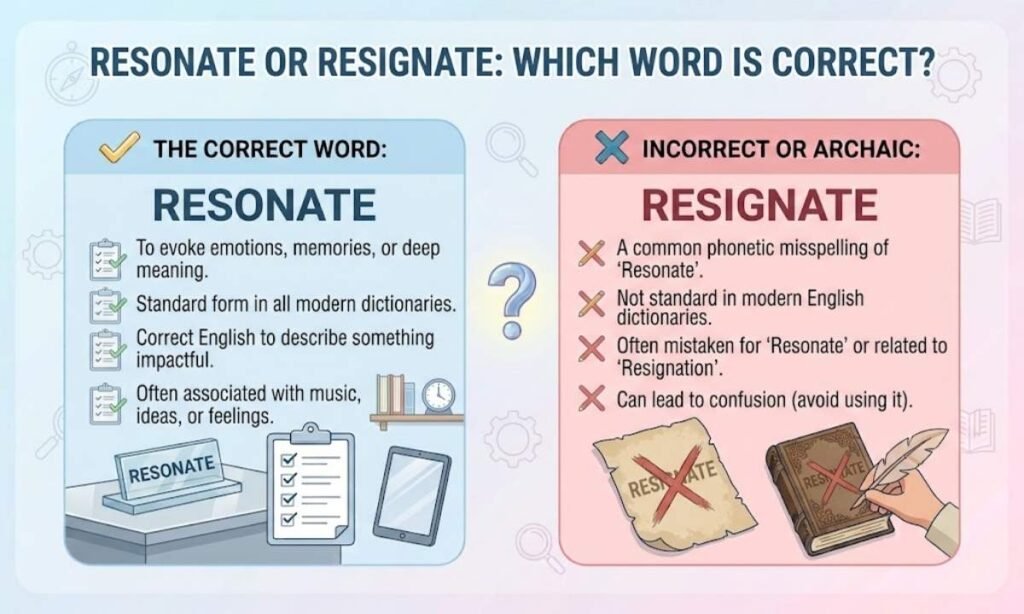
The short answer is that resonate is the only correct word in standard English. Resignate is not a recognized word in any major dictionary. This guide explains the meaning, the spelling rules, and how to use resonate correctly in everyday and professional writing.
Quick Answer: (Resignate or Resonate)
Resonate is the verb accepted by every major English dictionary, including Merriam Webster, Dictionary.com, and Collins. It means to produce a strong sound, or to create a lasting emotional or intellectual connection with someone.
Resignate does not appear in any standard dictionary. Language reference sites, including the Washington State University Common Errors list, specifically flag resignate as a mistaken form of resonate.
Is Resignate a Real Word?
No. Resignate is not listed in Merriam Webster, Oxford, Cambridge, or Collins dictionaries. It is considered a spelling error that happens when people blend the sound of resonate with the spelling of resign or resignation.
Because it looks similar to real words, resignate often passes spell check unnoticed, especially in fast typing or voice to text writing.
What Does Resonate Mean?
Resonate has two connected meanings.
• Literal meaning: to produce or amplify a deep, clear sound, such as a note resonating through a concert hall
• Figurative meaning: to be understood, felt, or agreed with strongly, as in an idea that resonates with an audience
The verb comes from the Latin resonare, meaning to sound again. Over time, English speakers extended the word beyond sound to describe emotional and intellectual impact.
What Does Resonate With Someone Mean?
When something resonates with someone, it connects with their beliefs, feelings, or experiences on a personal level. A speech, a song, or even a marketing message can resonate with an audience when it feels true or relatable to them.
Resignate vs Resonate: Key Differences
| Feature | Resonate | Resignate |
| Standard dictionary word | Yes | No |
| Meaning | To echo, vibrate, or emotionally connect | No accepted meaning |
| Correct usage | Widely used in speech and writing | Considered a spelling mistake |
| Common cause | Root word resonare | Confused with resign or resignation |
Why Do People Say Resignate Instead of Resonate?
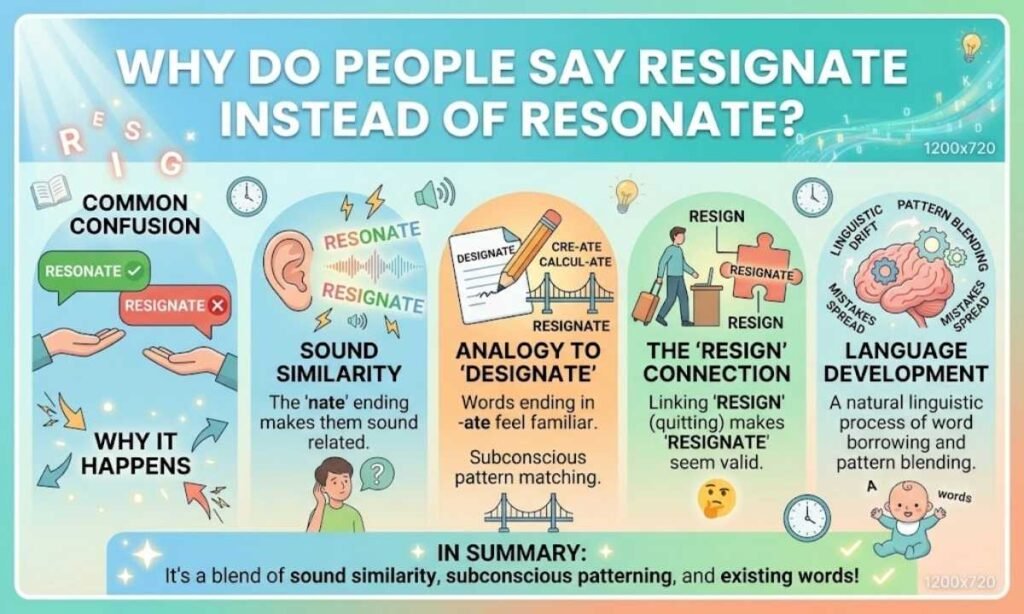
There are a few clear reasons this mix up keeps happening.
• The words sound almost identical when spoken quickly
• Resign and resignation are far more common words, so the brain defaults to that pattern
• The ate ending feels familiar from words like designate and originate
• Typos spread easily once they appear in online articles, captions, and social posts
Common Resignate Mistakes and Corrections
| Incorrect sentence | Corrected sentence |
| This really resignates with me | This really resonates with me |
| Her speech resignated with the audience | Her speech resonated with the audience |
| The message resignates with readers | The message resonates with readers |
| I hope this resignates with you | I hope this resonates with you |
How to Use Resonate Correctly in a Sentence?
Resonate is almost always followed by the word with when describing an emotional connection.
• The teacher’s advice resonated with every student in the room
• This campaign is designed to resonate with younger audiences
• Her story resonated with readers across the country
• The theme of honesty resonates throughout the entire novel
Resonate vs Resonated vs Resonating vs Resonates
• Resonate: base form, used with plural subjects or after words like will and can
• Resonates: used with singular subjects in present tense
• Resonated: past tense, describing something that already happened
• Resonating: present participle, often used after is, was, or keeps
Resonate Synonyms You Can Use Instead
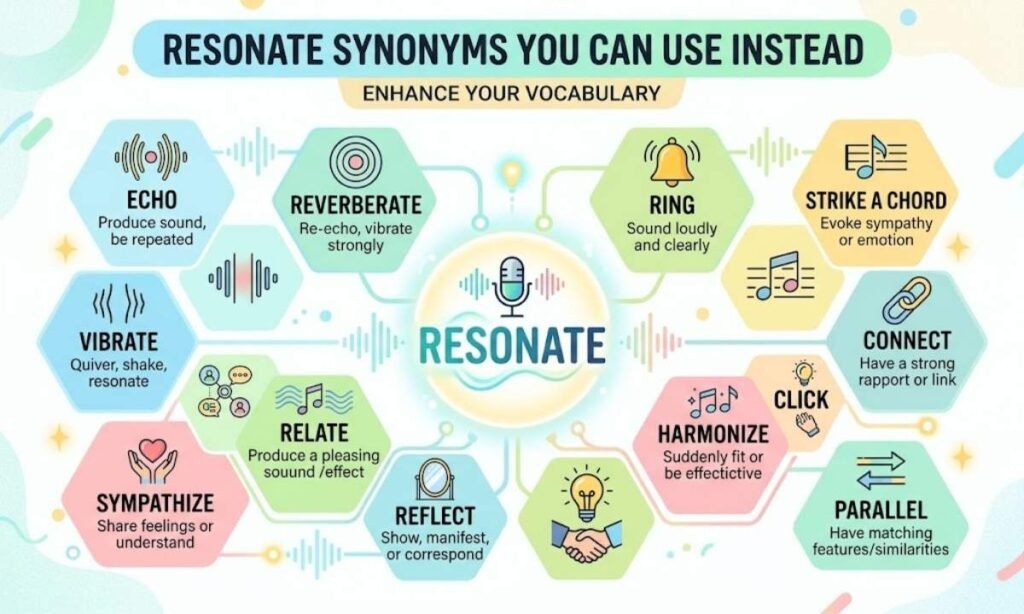
Using synonyms naturally improves writing variety and avoids repetition.
• Connect
• Strike a chord
• Relate
• Echo
• Reverberate
• Have an impact
Resonate Pronunciation and Word Forms
Resonate is pronounced REZ oh nate, with the stress on the first syllable. It should not be confused with resound, which means to repeat a sound rather than to expand or amplify it. The related noun form is resonance, and the adjective form is resonant.
Does Resonate Have a Noun Form?
Yes. The noun form is resonance, which describes the quality of resonating, either as a sound quality or as a lasting emotional effect. For example, a speaker might say a story has emotional resonance with its readers.
Resonate vs Relate: What Is the Difference?
Relate simply means to understand or connect with something on a basic level. Resonate suggests a deeper, often emotional or lasting response. A person might relate to a character, but a truly powerful scene will resonate with them long after the story ends.
Grammar Tip: Why Correct Spelling Matters in Online Writing
Search engines and readers both associate correct spelling with credibility. A single error like resignate can weaken trust in an otherwise well researched article, so proofreading tools and careful reading remain essential before publishing content.
How to Check If a Word Is Spelled Correctly?
• Look the word up in a recognized dictionary rather than relying on autocorrect
• Search the word alongside the phrase real word to see if reputable sources confirm it
• Compare it to its Latin or Greek root, since resonate traces back to resonare
• Read the sentence aloud, since many spelling errors are caught by ear rather than by eye
Resonate in American English: What Should You Write?
American English, British English, and all other standard varieties of English agree on this point. Resonate is correct in professional writing, academic assignments, emails, and everyday conversation. Resignate should not be used in any formal or informal context.
Frequently Asked Questions
Is Resignate a Correct Word?
No. Resignate is not found in any major dictionary and is treated as a spelling error for resonate.
Is Resonate the Correct Spelling?
Yes. Resonate is the correct and only accepted spelling for this verb in standard English.
What Is the Difference Between Resignate and Resonate?
Resonate is a real word meaning to echo or emotionally connect. Resignate has no accepted meaning and is simply a common mistake.
What Does Resonate With Me Mean?
It means something feels personally true, relatable, or emotionally meaningful to the speaker.
Can I Say This Resignates With Me?
No. The correct sentence is This resonates with me, since resignate is not a standard word.
What Is the Past Tense of Resonate?
The past tense is resonated, as in the speech resonated with the crowd.
What Is a Synonym for Resonate?
Common synonyms include connect, relate, echo, and strike a chord.
Conclusion
Resonate is the only correct word to use when describing a strong emotional or intellectual connection, or a deep, clear sound.
Resignate is not a recognized word in English and should always be replaced with resonate in speech and writing. Remembering the Latin root resonare, meaning to sound again, is the easiest way to keep the spelling correct going forward.